
Naturally Fermented Pickles (No Vinegar)
Crunchy, tangy cucumber pickles made by lactic acid fermentation in a simple salt brine—no vinegar needed. This method uses beneficial microbes to acidify and preserve the cucumbers while building complex, savory flavor.
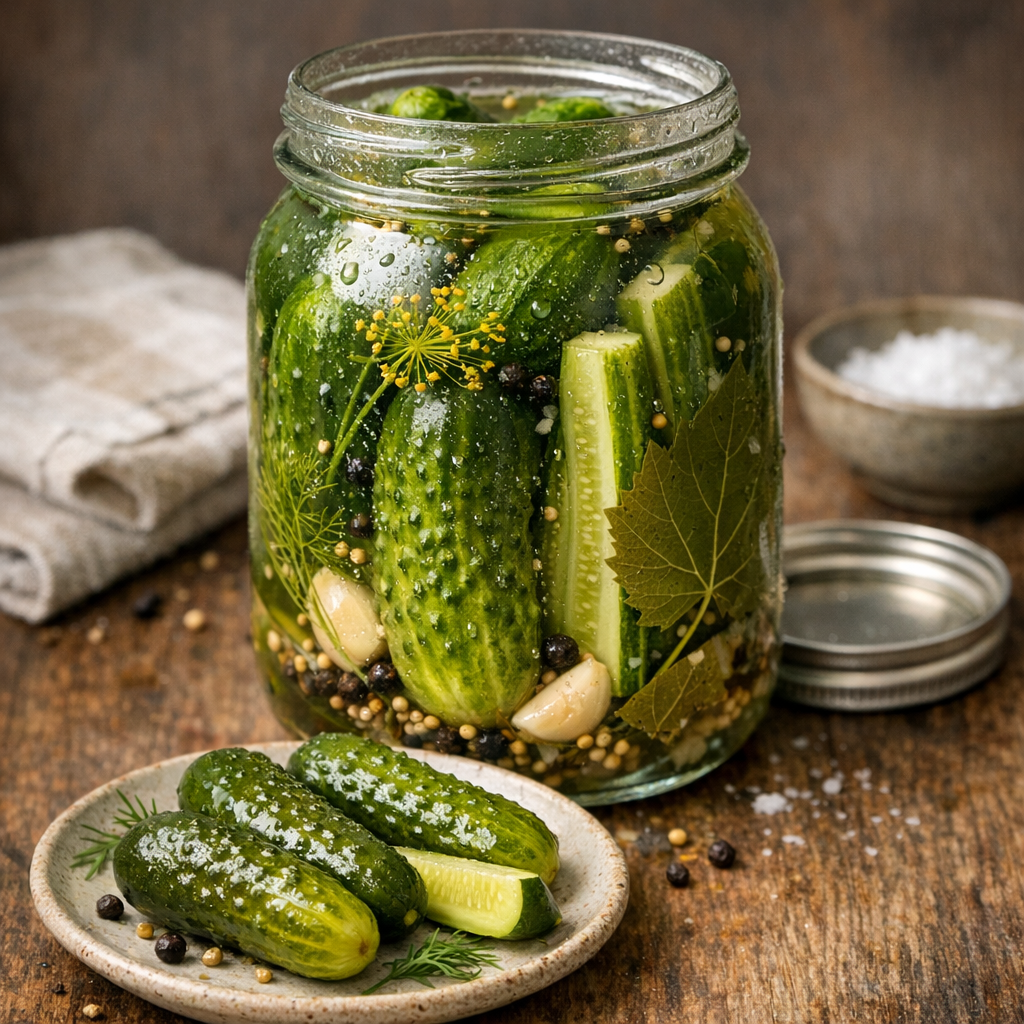
%20%7C%20Crunchy%2C%20tangy%20cucumber%20pickles%20made%20by%20lactic%20acid%20fermentation%20in%20a%20simple%20salt%20brine%E2%80%94no%20vinegar%20needed.%20This%20method%20uses%20beneficial%20microbes%20to%20acidify%20and%20preserve%20the%20cucumbers%20while%20building%20complex%2C%20savory%20flavor.%20%7C%2020%20minutes%20%E2%80%A2%208%20servings%20%23Component%20%23MakeAhead%20%23Vegan%20%23GlutenFree%20%23Fermented%20%23recipe%20%23cooking%20%23savecooking)
Fermentation turns cucumbers into pickles by letting lactic acid bacteria convert vegetable sugars into lactic acid, naturally lowering pH and protecting the food. Salt is the key control knob: it slows spoilage organisms, favors lactic acid bacteria, and helps keep the pickles crisp. Once you understand brine percentage, temperature, and oxygen control, you can reliably dial in sourness and crunch. Think of this as a small, edible lab experiment with delicious data.
Total Time
20 min
Prep Time
20 min
Servings
8
Ingredients
Vegetables
- •900 g (about 2 lb) small pickling cucumbers (Kirby), very fresh
- •3–4 cloves garlic, lightly crushed (optional)
- •1–2 tsp black peppercorns (optional)
- •1–2 tsp mustard seeds (optional)
- •1/2 tsp red pepper flakes (optional)
Fresh herbs (choose one or combine)
- •2–4 fresh dill sprigs and/or 1–2 dill heads
- •2–3 grape leaves or 1–2 oak leaves (optional, for tannins/crunch)
Brine (3.5% by weight)
- •1 liter water, chlorine-free (filtered or rested overnight)
- •35 g non-iodized salt (fine sea salt or pickling salt)
To keep cucumbers submerged
- •Fermentation weight, or a small zip-top bag filled with brine
Instructions
- 1
Clean and prep equipment: Wash a 1.5–2 liter jar (or fermentation crock) and any weights. Soap-and-water clean is sufficient; avoid residual sanitizer odors. If using tap water, ensure it’s chlorine-free (chlorine can slow fermentation).
- 2
Prep cucumbers: Rinse cucumbers well. Trim 3–5 mm off the blossom end of each cucumber (the flower end contains enzymes that can soften pickles). Leave whole or cut into spears, keeping sizes consistent for even fermentation.
- 3
Make the brine: Dissolve 35 g salt in 1 liter water to make a 3.5% brine. (Science note: brine percentage is salt ÷ water by weight; 3–4% is a reliable range for cucumber pickles.)
- 4
Pack the jar: Add garlic, spices, and dill to the bottom. Pack cucumbers tightly to reduce floating and trapped air pockets. Tuck in grape/oak leaves if using.
- 5
Add brine and submerge: Pour brine over cucumbers until fully covered, leaving 2–3 cm (about 1 inch) headspace. Place a fermentation weight on top (or a small brine-filled bag) so all cucumbers stay below the brine surface—this is critical for preventing mold/yeast.
- 6
Ferment: Cover with an airlock lid or a loosely tightened lid (to allow gas to escape). Set the jar on a tray to catch overflow. Ferment at 18–22°C (65–72°F) out of direct sunlight for 5–10 days.
- 7
Monitor daily (quick checks): You should see bubbles within 24–72 hours and the brine may turn cloudy—both are normal. If a harmless white film (kahm yeast) forms, skim it and ensure everything remains submerged. If you see fuzzy mold above the brine line, discard and restart.
- 8
Taste and decide the endpoint: Start tasting at day 5. When the pickles are pleasantly sour and still crisp, move the jar to the refrigerator to slow fermentation. Flavor will continue to develop more slowly in the cold.
- 9
Storage: Keep pickles refrigerated and submerged in brine. Best texture is within 2–4 weeks, but they can keep longer if kept cold and below the brine.
Nutrition Facts
Per serving
* Percent Daily Values are based on a 2,000 calorie diet.
Nutrition calculated automatically from ingredients.